Risk management
Our priority in the management of risk is that lotteries and sports pools be conducted in a well-regulated and responsible manner that ensures participants thereof are duly protected.
Overview
Risk management is an integral part of our governance model and daily operations. We not only focus on ensuring that we reduce uncertainty through minimising the downside effects of risk. Where feasible, we also actively seek and capitalise on the potential upside presented by strategic and operational opportunities that aid in achieving our strategic objectives.
We recognise that our work directly impacts certain areas of shareholder value, risk, and, in some cases, reputation. We therefore deliberately adopt a view that our work should in material segments correlate and strike a balance between our mandate and shareholder priorities in so far as these promote positive performance and sustainable outcomes. Through ongoing shareholder interface through the Board and from an operational perspective through the executive management team, we continue to promote a positive and value-building relationship between the organisation and our shareholder.
The risk implications of Covid-19
The period covered by this report was characterised by government’s introduction of the risk-adjusted strategy for addressing and responding to the Covid-19 pandemic. As the country moved between higher and lower lockdown levels, the organisation similarly adapted its operational strategies to align with the conditions imposed by each lockdown level. What informed the organisation’s structured response is a pandemic response and mitigation strategy that had long been conceived before entering the first lockdown in early 2020. Through formalised crisis management and response planning, the organisation ensured minimal operational and performance impact in the face of a formidable threat in South Africa and globally.
Our policy on risk management
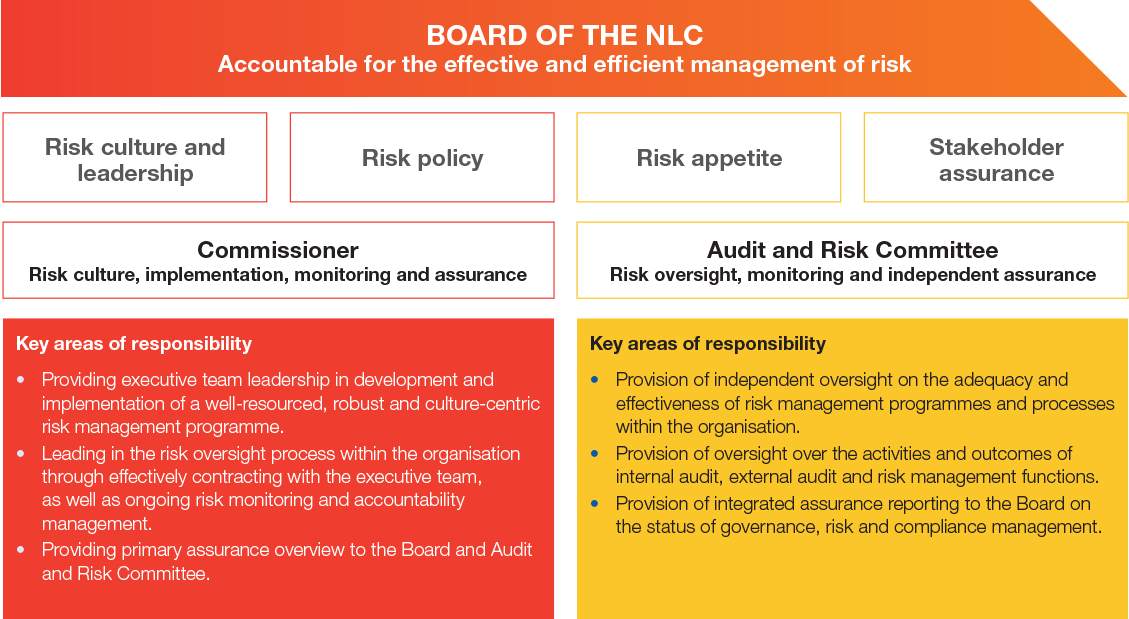
The organisation’s risk management efforts are directed by an enterprise risk management policy, which the Board approves after receiving inputs and recommendations from the Audit and Risk Committee and the executive management team. This policy provides clear and measurable principles that will be achieved by the risk management programme, and that shall be observed by all officials within the organisation.
In terms of our policy, the Board, Commissioner as well as all staff members and stakeholders who utilise organisational resources and deliver the organisation’s programmes, products and services are expected to observe the requisite prudence and ensure that they manage risk to prevent adverse impact on lottery participants, beneficiaries, the National Lottery Operator, community lotteries, other stakeholders and the organisation, whether immediately or in the future.
Structure and accountability management
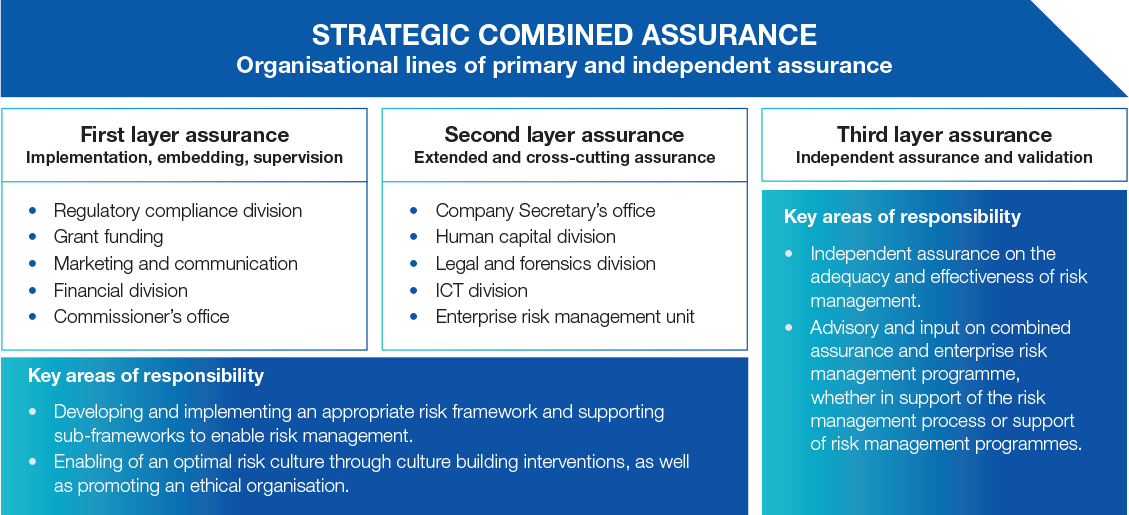
To ensure that the risk management programme is adequately resourced and enabled for effective implementation, the organisation has implemented the following structure:
Our risk appetite position
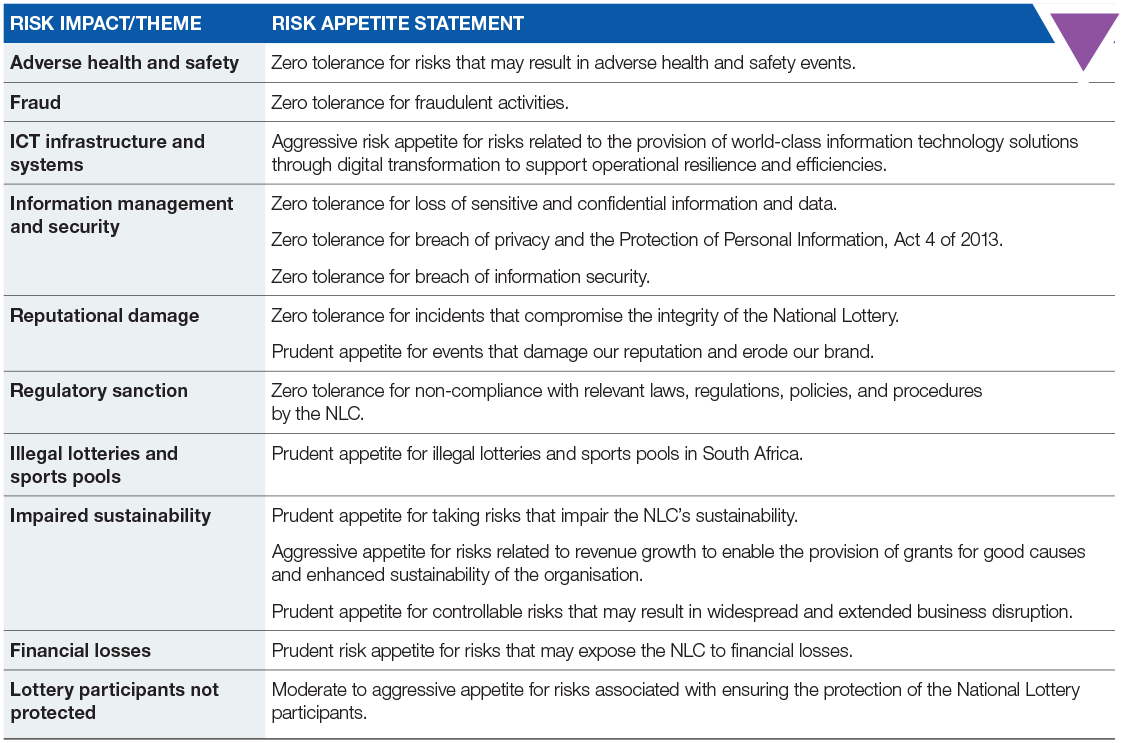
The relevant risk appetite position of the organisation is formally recorded in an approved risk appetite framework and statement. Risk appetite is based on an expression of the possible or actual effects of risk and an overall policy position as to the level of willingness to take on risks that present such effects on the organisation. As a separate but related consideration, the organisation also formalises its risk tolerance thresholds related to each risk appetite theme, reflecting upon the degrees of variance in performance arising because of risk and the relative acceptability thereof. Risk tolerance limits are also beneficial in promoting prevention and early detection of potential risk appetite breaches.
Our risk maturity journey
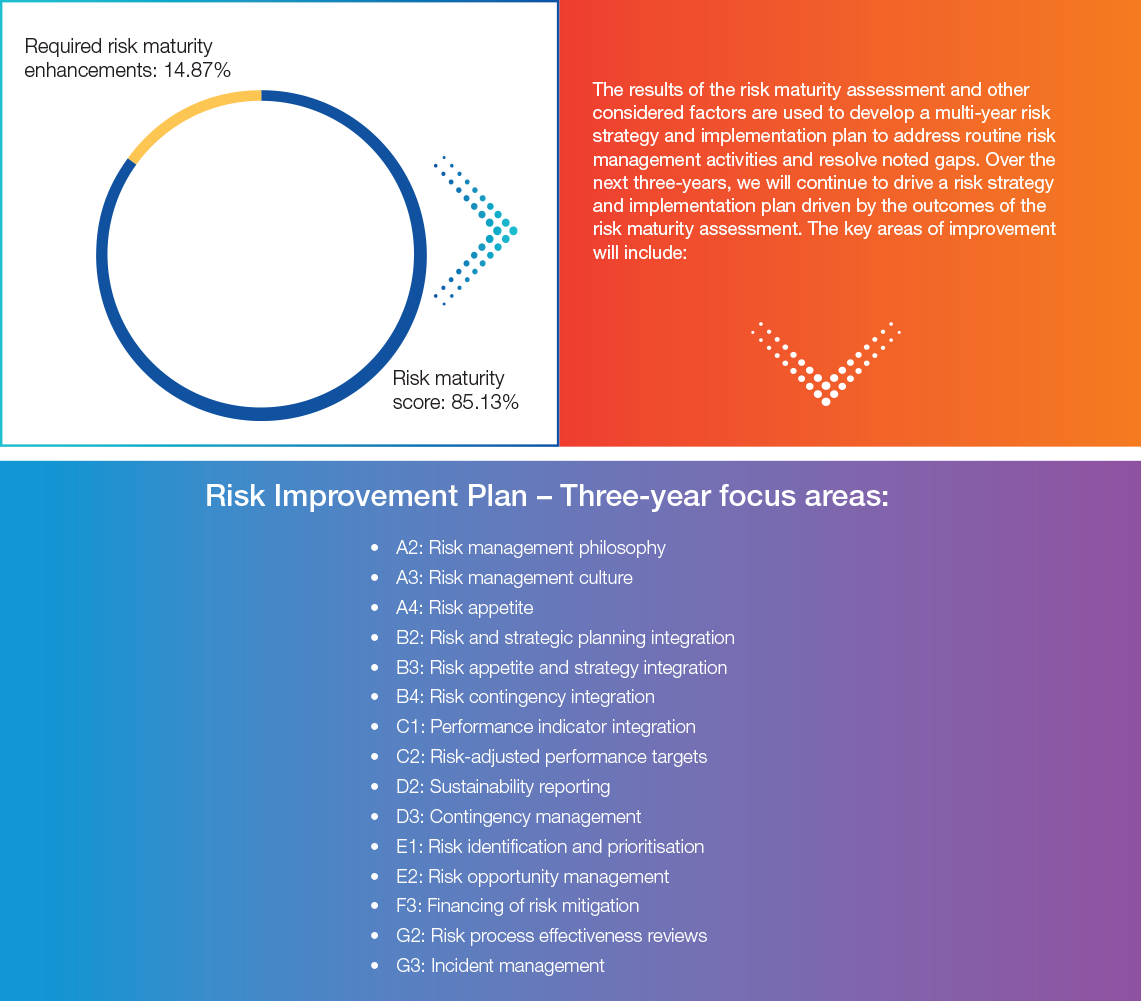
We conduct formal risk maturity assessments on an ongoing basis to determine areas of strength and opportunities for improvement in our risk management practices. Our most recent risk maturity outcome in terms of the attribute-based maturity index for risk management demonstrates that our risk management programme is operating at level five, out of six possible levels. This level signifies that we have transcended implementation stages and are now actively managing risk as we pursue the ultimate maturity level wherein we are considered as optimising risk and risk management.
Key strategic risks and responses
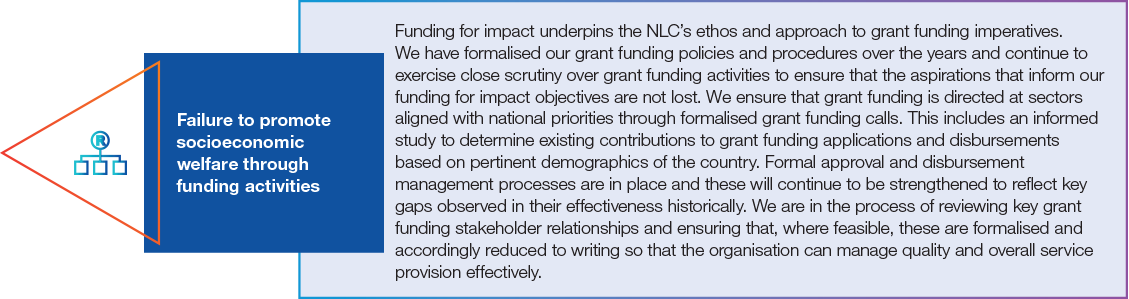
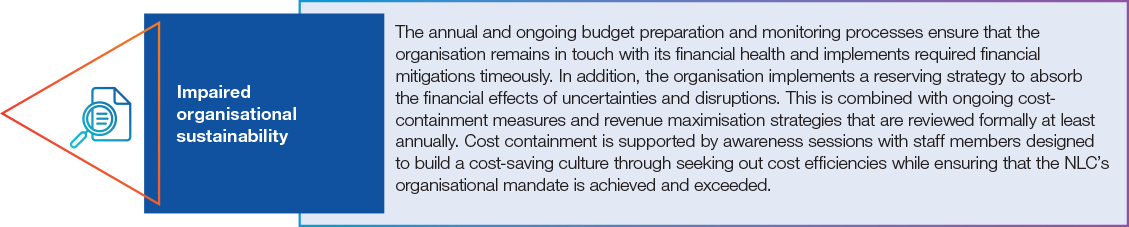
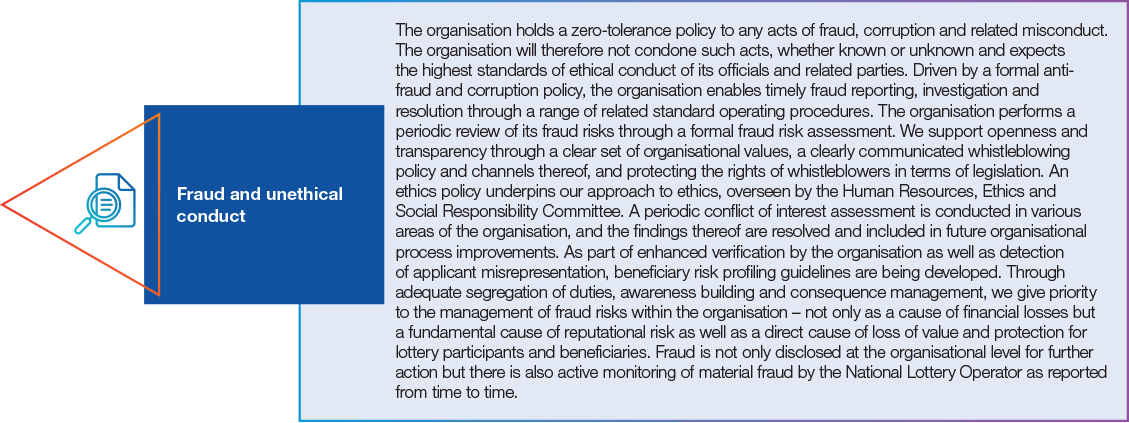
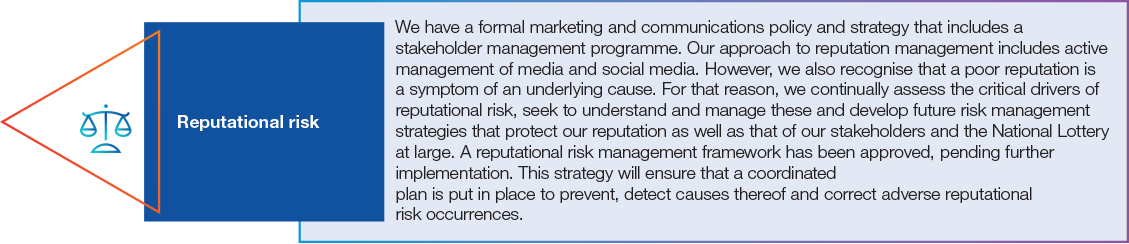
Our top strategic risks are diverse and consider issues that may directly impact the achievement of strategic objectives, annual performance plans, regulatory mandate, and reputation, among other aspects. We have adopted a formalised and ongoing risk assessment process. The core strategic risks of the organisation are as below:









Emerging risks
We identify additional risks during the year as part of our ongoing risk assessment culture. We do this through a formalised emerging risk identification, assessment, and response process. By implementing an agile and responsive emerging risk management process, we can ensure that our risk information, priorities and responses remain relevant in the face of ever-changing circumstances.



« Previous Next »