
Human capital
Overview of activities achieved in line with our values

|
 |
Engaging employees on work-from-home practices to maintain productivity and ensure we maintain professional integrity across the organisation. |

|
|
Engaged in workplace preparedness training to upskill and support employees to thrive in the current context. |

|
|
Ensured heightened focus on employee mental wellbeing – focusing on enhancing resilience, including introducing a resilience app. |

|
|
Undertook a skills gap analysis in line with our future-fit people strategy and continued to focus on ensuring a resilient succession pipeline by engaging in various organisational and individual training, including executive coaching. |

|
|
Initiated an innovation hub to create a platform for employees to develop and expand on innovative ideas that can progress the organisation. |
The Human Capital Management (HCM) department positions itself as a strategic partner that creates value and supports its stakeholders in establishing a conducive working environment. The HCM operational strategy is aligned with the organisational strategy. We therefore see ourselves as a critical enabler of the NLC ultimate outcomes and are custodians of a competent, capable and relevant public entity. HCM resides firmly within the organisation’s strategic objectives and subscribes to the requirements thereof, promoting the cascading of performance management and measurement at all levels, as shown in the diagram below.
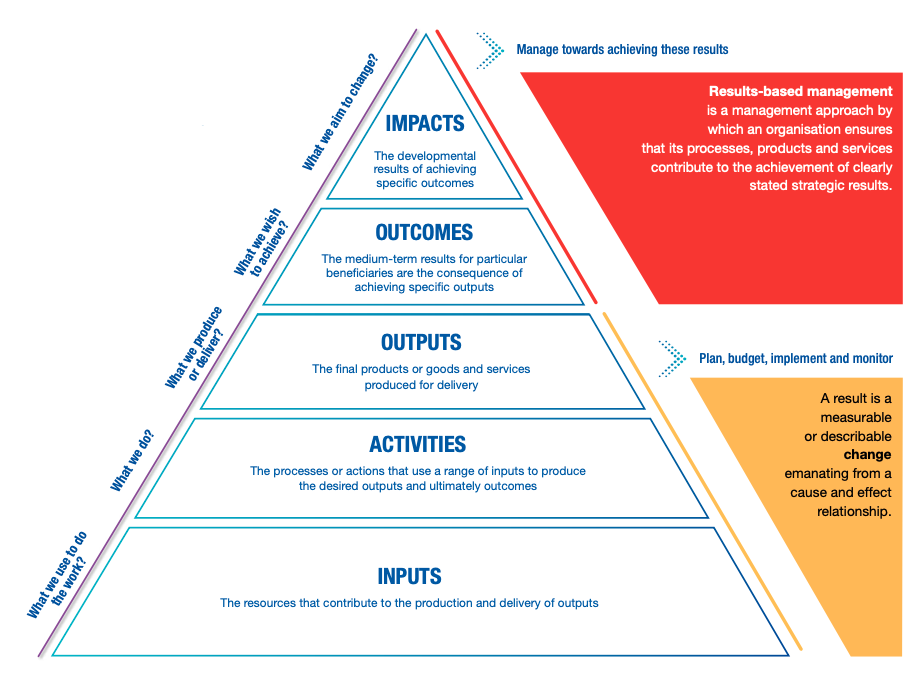
Employee performance management framework
Employee performance management is an ongoing process for establishing a shared understanding of organisational goals. The focus is on aligning the NLC strategic objectives with the employees’ agreed measures, skills, competency requirements, development plans and the delivery of results.
The emphasis is on improvement, learning and development to achieve the overall business strategy and create a high-performance culture.
The balanced scorecard approach is one of the performance management tools that the NLC uses. It assists line managers in cascading strategies into well-structured performance measures. The balanced scorecard offers a common platform for the entire organisation for performance evaluation. It demands a systematic approach for carrying the NLC day-to-day and long-term activities efficiently.
The NLC’s effective performance management process establishes the foundation for excellence by:
- Linking individual employee objectives with the organisation’s mission and strategic plans, thereby enabling employees to understand how they contribute to the achievement of broader business objectives.
- Focusing on setting clear performance objectives and expectations through the use of results, actions and behaviours.
- Defining clear development plans as part of the process.
Employee wellness programmes
Our employee wellness programme (Zithande) has, since its inception, evolved to be an essential part of our organisation, with its core focus on the physical, mental and financial health of our staff members and their families. The programme’s success can be seen in the increased uptake of the programmes and services offered by Zithande, with a utilisation of 23.5% as at the end of the financial year 2020/2021. The most prevalent issues requiring support included personal performance matters and organisational issues requiring robust staff engagement to produce a conducive working environment.
Policy development
The NLC prides itself on its HCM policies aligned with legislature and supported by SOPs for ease of use. All functions are supported by relevant policies that are in line with NLC strategy and Divisional Operational strategies. All policies are reviewed annually through the Policy Review Committee to ensure standardisation and alignment.
Achievements 2020/2021
HCM has achieved all targets for the year and ensured quality assurance. The year saw the successful implementation of the performance excellence scorecard, which contributed to igniting a high-performance culture in the organisation. We conducted workshops on the performance scorecard to ensure the mechanism was understood by all levels of the business. The leadership development programme was achieved and has positively impacted the NLC staff interaction across the business.
As the fourth industrial revolution becomes ever more pervasive, HCM conducted digital readiness assessments and a skills audit to assess the digital readiness of employees and their attitude towards new technologies/Oracle Fusion (ERP) and to ensure that the NLC’s mandate of being a regulator is supported by relevant technological, technical and soft skills.
Challenges faced by the NLC
The NLC has seen a fair share of labour relations matters common across all industries. The challenges include, among others, conflict management and change management. Ensuring staff were supported in the transition to a work-from-home environment was also crucial and necessitated a heightened focus on mental wellbeing within the current context.
Future human capital plans/goals
Our innovation framework is inspired by the NLC’s recently adopted organisational value – Innovation and Agility. It consists of a cohesive set of best practices that inspire cross-functional, multidisciplinary, visionary and imaginative teams to look beyond the obvious, explore a broad range of possibilities, identify significant opportunities, make informed decisions about the most promising paths to pursue and create a shared NLC vision for sustainability, progressive regulation, relevance, and impact. HCM is supporting the organisation’s alignment within a 4IR context by creating an innovation hub platform, which will contribute to innovative organisational solutions going forward.
A skills analysis was conducted during the year to highlight the current dearth of skills within NLC as well as the key skills that are required in order to deliver on divisional imperatives and the NLC’s mandate. The recommendations of the analysis will be implemented going forward. Furthermore, the NLC organisational design has been evolving due to the legislative change and alignment to the grant funding and regulatory compliance operational model. Implementing the ERP system to enable efficiency improvements has also contributed to changes in organisational design. The focus areas for the new financial year include:
- Future-fit people strategy
Implementing the future-fit people strategy will create an evolving organisation that is human-led and digitally enabled.
The strategy’s focus will be on leadership, culture, competencies and skills needed for the future value created. - Competent and credible workforce.
HCM will utilise talent analytics based on business intelligence and business analysis to support the NLC. Upskilling and re-skilling programmes, professionalisation and capacitation of the NLC will be the priority during this financial year. - High-performance culture
As a strategic business partner to all divisions, HCM will introduce programmes that cultivate a high-performance culture by focusing on the following strategic performance areas:- 180 degrees performance management scorecard.
- Implement a total reward model.
- Return on human capital (labour costs, cost per hire and cost per trainee and absenteeism rates) as measurements to manage the people cost.
Personnel cost by salary band
| Level | Personnel expenditure |
% of personnel exp. to total personnel cost (R’000) |
No. of employees |
Average personnel cost per employee (R’000 |
|---|---|---|---|---|
| Top management | R17 281 439 | 5.5 | 7 | R2 468 |
| Senior management | R85 130 095 | 27.3 | 36 | R2 364 |
| Professional qualified | R74 544 131.29 | 22 | 44 | R1 694 |
| Skilled | R102 891 231 | 32.0 | 161 | R639 |
| Semi-skilled | R15 539 970.5 | 5.0 | 23 | R675 |
| Unskilled | R15 806 297.6 | 5.1 | 38 | R415 |
| Total | R311 193 163 | 96.9 | 309 | R5 886 |
Performance rewards
| Programme/activity/objective | Performance rewards | Personnel expenditure (R’000) | % of performance rewards to total personnel cost (R’000) |
|---|---|---|---|
| Top management | R4 385 202.87 | R17 281 | 25% |
| Senior management | R11 894 791.62 | R85 130 | 13.9% |
| Professional qualified | R7 385 128.46 | R74 544 | 9.9% |
| Skilled | R11 322 544.15 | R102 891 | 11% |
| Semi-skilled | R35 706 837.00 | R15 539 | 5% |
Training costs
| Programme/activity/ objective |
Personnel expenditure (R) |
Training expenditure (R) |
Training expenditure as a percentage of personnel cost |
No. of employees trained |
Average training cost per employee (R) |
|---|---|---|---|---|---|
| Top management | 17 281 439 | 211 030.04 | 1.22% | 7 | 30 147 |
| Senior management | 85 130 095 | 348 431.06 | 0.41% | 28 | 12 443 |
| Professional qualified | 74 544 131.29 | 1 475 558.02 | 1.98% | 71 | 20 782 |
| Skilled | 102 891 231 | 621 575.18 | 0.60% | 56 | 11 099 |
| Semi-skilled | 15 539 970.5 | 482 782.03 | 3.11% | 37 | 13 048 |
| Unskilled | 15 806 297.6 | 113 986.04 | 0.72% | 34 | 3 352 |
| Total | 311 193 163 | 3 253 362.65 | 1.2% | 233 | 100 176 |
Labour relations: Misconduct and disciplinary action
| Nature of disciplinary action | Number |
|---|---|
| Verbal warning | – |
| Written warning | 1 |
| Final written warning | 3 |
| Dismissal | 1 |
Human resources oversight statistics
Vacancies
| Occupational level | 2020/2021 No. of employees |
|---|---|
| Top management | – |
| Senior management | 10 |
| Professional qualified | 5 |
| Skilled | 11 |
| Semi-skilled | 8 |
| Unskilled | – |
The NLC has ten (10) vacant positions on Senior Management level, eight (8) of the ten (10) are Distributing Agency Members. NLC has adopted an approach of filling openings/vacancies using their own internal succession and development plans.
Employment changes
| Occupational level | Employment at the beginning of the period |
Appointments | Termination | Employment at end of period |
|---|---|---|---|---|
| Top management | 7 | – | – | 7 |
| Senior management | 35 | 2 | 1 | 36 |
| Professional qualified | 46 | 2 | 2 | 46 |
| Skilled | 89 | 5 | 6 | 88 |
| Semi-skilled | 126 | 13 | 24 | 115 |
| Unskilled | 17 | – | – | 17 |
Due to the successful implementation of our succession plan and internship programme, the NLC has over the year people from outside the organisation to fill both higher and lower-level positions. Our internship programme ensures that our interns are trained and empowered with the necessary skills, competencies, and experience to prepare them for permanent roles. On professional and Senior Management levels, the NLC makes appointments from both internal and external sources.
| Occupational category | Training expenditure |
Personnel expenditure |
Training Expenditure as a % of Personnel Cost. |
No. of Employees |
Average training cost per employee |
|---|---|---|---|---|---|
| Top management | R211 030.04 | R17 281 439.00 | 1.22% | 7 | 30 147 |
| Senior management | R348 431.06 | R85 130 095 | 0.41% | 28 | 12 443 |
| Professional qualified | R1 475 558.02 | R74 544 131.29 | 1.98% | 71 | 20 782 |
| Skilled | R621 575.18 | R102 891 231 | 0.60% | 56 | 11 099 |
| Semi-skilled | R482 782.03 | R15 539 970.5 | 3.11% | 37 | 13 048 |
| Unskilled | R113 986.04 | R15 806 297.6 | 0.72% | 34 | 3 352 |
| Total | R3 253 362.65 | R311 193 163 | 233 |
Reasons for staff leaving
| Reason | Number |
|---|---|
| Death | – |
| Resignation | 4 |
| Dismissal | 1 |
| Retirement | – |
| Ill-health | 1 |
| Expiry of contract | 24 |
| Other | – |
| Total | 30 |
The reasons for staff leaving vary and include:
1. Resignation comprises interns not completing their internship programmes and employees being appointed by other organisations.
2. The expiry of contracts includes internship contracts ending.
Equity target and employment equity status
| Males | ||||||||
|---|---|---|---|---|---|---|---|---|
| African | Coloured | Indian | White | |||||
| Levels | Current | Target | Current | Target | Current | Target | Current | Target |
| Top management | 3 | 3 | – | - | – | – | - | - |
| Senior management | 18 | 12 | 2 | 1 | 1 | 1 | – | – |
| Professional qualified | 22 | 18 | 1 | 1 | – | – | – | – |
| Skilled | 33 | 36 | 2 | 4 | 1 | 1 | 1 | 1 |
| Semi-skilled | 50 | 53 | – | – | – | – | – | – |
| Unskilled | 3 | 5 | – | – | – | – | – | – |
| Females | ||||||||
|---|---|---|---|---|---|---|---|---|
| African | Coloured | Indian | White | |||||
| Levels | Current | Target | Current | Target | Current | Target | Current | Target |
| Top management | 4 | 4 | – | - | – | – | - | - |
| Senior management | 12 | 18 | 3 | 3 | 1 | 1 | 1 | 1 |
| Professional qualified | 20 | 28 | – | – | – | – | 2 | 2 |
| Skilled | 47 | 52 | – | - | – | – | 2 | 2 |
| Semi-skilled | 79 | 83 | – | – | – | – | – | – |
| Unskilled | 14 | 10 | – | – | – | – | – | – |
| People living with disability | ||||
|---|---|---|---|---|
| Male | Female | |||
| Levels | Current | Target | Current | Target |
| Top management | – | – | – | – |
| Senior management | 1 | 1 | 3 | 1 |
| Professional qualified | 2 | 1 | – | 1 |
| Skilled | 2 | 1 | 3 | 1 |
| Semi-skilled | 2 | 1 | – | 1 |
| Unskilled | – | – | – | – |
As part of measures to redress the disadvantages in employment experienced by designated groups and ensure the equitable representation in all occupation categories and levels within the NLC, we successfully achieved most of our employment equity targets. However, improvement can be made by increasing the percentage of African female senior managers (targeting a 2% improvement). The NLC has exceeded the target for people living with disabilities within the organisation, with 4% of our staff complement consisting of people living with disabilities (2% above the target stipulated in the Employment Equity Act). The NLC endeavours to increase these numbers to encourage diversity within the organisation.
« Previous Next »